Cooling mats are easy to merchandise as a seasonal accessory, but a UAE retailer needs more than a blue surface and a summer photograph. The useful buying questions concern materials, contact area, seams, cleaning and the limits of the cooling effect. A mat should be sold with realistic instructions for a suitable environment, not as a guarantee that a pet can safely remain in heat.
Identify the cooling mechanism first
Products described as cooling mats may use gel, water, evaporation or other constructions. These are not interchangeable. Ask the supplier to identify the exact model, outer material, filling, operating principle and preparation requirements. Clarify whether it needs water, chilling, a rest period or any other step. Do not copy a competitor's instructions onto a visually similar product.
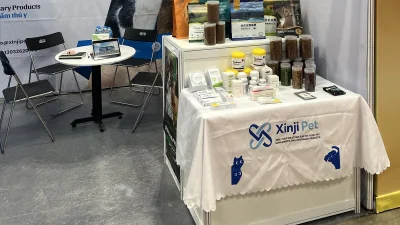
The Xinji Pet Supplies catalogue includes gel cooling formats. Availability of a category does not establish the performance, sizes or safety documentation of a specific batch; those belong in the product specification and sample review.
Match the mat to the resting dog
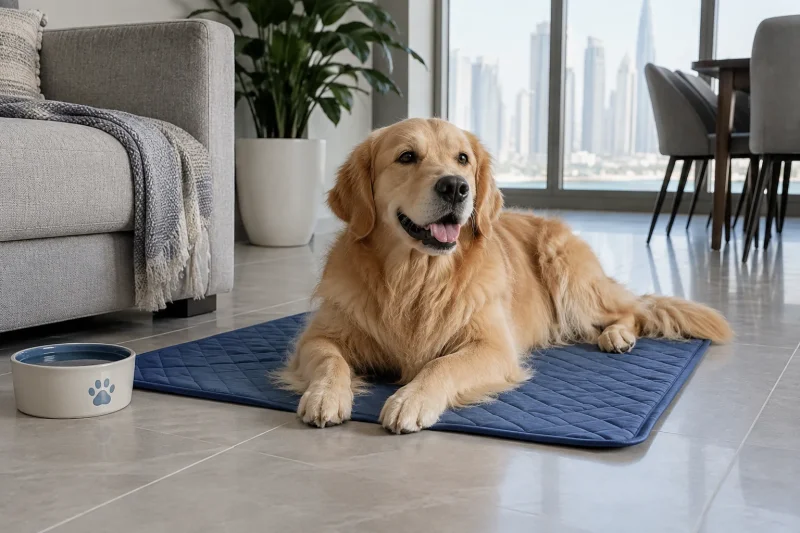
Compare usable flat area rather than relying on small, medium and large labels. Show length and width on a diagram and explain whether raised sides or seams reduce the usable surface. A photo should demonstrate scale without implying that every dog of one breed fits. Consider how owners will position the mat on tile, inside an appropriately sized resting area or in another location permitted by the instructions.
Check whether the mat shifts on representative dry flooring. Inspect curling corners and whether the dog can move off the mat freely. Avoid using a carrier image to imply travel suitability unless the dimensions, ventilation and use instructions have been assessed for that purpose.
What should a sample inspection record?
- Outer layer: material identification, surface finish, odour and visible defects.
- Seams: consistent joining, filling distribution and leakage under the supplier's agreed inspection procedure.
- Cleaning: approved cleaners, wiping method and drying requirements.
- Storage: whether it can be folded, how tightly and under what conditions.
- Damage response: clear instructions to stop use if punctured, leaking or otherwise compromised.
Request evidence supporting material and safety claims. “Non-toxic” printed on a sales sheet is not a substitute for relevant documentation. No mat should be marketed as chew-proof without a defensible basis. A household with a persistent chewer may need a different product or closer supervision.
Performance claims need test conditions
If a supplier states a temperature reduction or duration, ask about starting temperature, room conditions, contact method, test equipment and how the result was calculated. A brief touch comparison cannot establish hours of performance. In-store demonstrations should be described as demonstrations, not as laboratory validation.
The RSPCA's discussion of cooling-mat limitations notes that a mat can warm up and requires monitoring. Present a mat as an additional comfort product within appropriate care. It does not replace shade, ventilation, access to water or veterinary attention when an animal is unwell.
Plan UAE delivery and storage as part of quality
Ask what temperatures and handling the product can withstand in its packed state, and compare those conditions with your actual warehouse and last-mile service. Do not leave demonstrations in direct sun and assume the result represents normal use. Check folded packs for permanent creases or damage after a representative delivery trial.
Our UAE storage and packaging article covers heat exposure in the food supply chain. Mats need their own material-specific limits, but the same operational lesson applies: document handovers and protect stock according to the actual product's instructions.
Make the retail explanation easy to verify
Display the model, dimensions, construction, preparation, cleaning, storage and damage warnings together. Provide language versions appropriate to the intended retail channel and have them reviewed locally before sale. Keep information consistent between packaging, staff advice and online listings. Avoid a dramatic outdoor image that contradicts instructions to use the item in a shaded indoor setting.
For a first range, compare a small number of genuinely different sizes or constructions. Our higher-value UAE retail mix guide can help position an accessory alongside existing products. Measure returns by reason: insufficient size, puncture, unclear expectations and packaging damage require different corrections.
A useful enquiry includes target users, usable dimensions, intended environment, preferred construction, documentation requirements and delivery conditions. Confirm the sample and instructions before approving packaging artwork. That sequence gives the retailer a product it can explain accurately, rather than a seasonal claim it cannot substantiate.